

The Cost of Total Knee Replacement
Knee replacement cost comparison charts updated April 2024
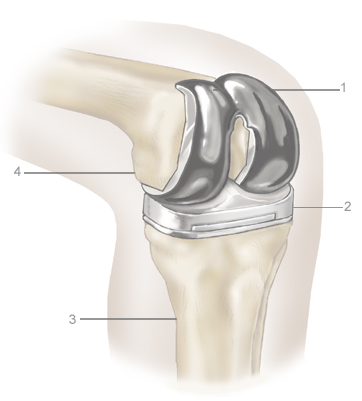 Total knee replacement surgery—also known as knee arthroplasty—is a procedure performed when a patient’s knee has degraded to the point where it no longer functions or causes severe pain. Usually, knee replacement surgery is necessary for patients who suffer from severe osteoarthritis and have impeded mobility.
When determined to be necessary by a doctor, knee replacement surgery is usually covered by health insurance. Most health plans cover any necessary surgery, including orthopedic surgery, as long as it is not specifically excluded.
How much does a knee replacement cost?
The cost of total knee replacement surgery in the United States varies greatly, with prices between $15,000 and $70,000. The average cost of knee replacement surgery (without complications) is $29,300, according to a study by the Journal of Orthopaedic Surgery and Research. If you are insured, your out-of-pocket costs will depend on your coverage level.
Is knee replacement surgery covered by insurance?
Yes, in most cases. For most health insurance plans sponsored by employers or purchased through healthcare.gov, knee replacement surgery is covered by health insurance when recommended by your doctor. Despite this, you may still be responsible for a large out-of-pocket cost. For example, if your co-insurance is 20% and your yearly out-of-pocket maximum is $7,200, you would be liable for a $7,200 bill after your surgery and recovery.
Is a knee replacement covered by Medicare?
Yes, knee replacement surgery is covered by Medicare. You will still have out-of-pocket costs determined by your Part B deductible and 20% coinsurance. Medicare will also typically cover the cost of future appointments and medical equipment, such as canes, walkers, or crutches. If you do not have Medicare Part D (the prescription drug program), you may also need to cover the cost of necessary medications.
What other costs should I worry about?
After you are discharged from the hospital, you will still need to be vigilant in caring for your new knee. You will likely be prescribed medications for pain and to reduce the risk of infection and blood clots. It is also very common to need physical therapy or rehabilitation after surgery, which can be costly depending on your coverage. Always consult with your doctor and insurance provider to make sure you know exactly what coverage you have before your surgery.
What about partial knee replacement?
The cost of partial knee replacement surgery is usually 10-20% lower than the total knee replacement cost due to the shorter hospital stay required. Depending on your healthcare provider, you can expect to pay between $36,000 and $65,000 for partial knee replacement surgery.
Can I get knee replacement surgery on an outpatient basis?
Outpatient knee replacement surgery is becoming more and more common, especially in the age of COVID-19. Healthline reports that hospitals are increasingly discharging patients on the same day as their surgery.
The best candidates for outpatient knee or hip replacement surgery, are healthy, under 70 years old, and have a home environment that is conducive to rehabilitation. It's key for patients to be able to follow the instructions and rehabilitation plan provided by their doctors, as without the watchful eyes of medical professionals, recovery can be more difficult.
What should be included in the cost?
Prior to surgery, your orthopedic surgeon should carry out an evaluation of your knee’s present strength and range of motion, and make the determination of whether total knee replacement surgery is the best course of action.
If your surgeon decides to proceed with the operation, there are a number of services that should be included in the cost. Anesthesia, perhaps the most important part of any surgical procedure, is included in the cost at almost every hospital. For total knee replacement, general or epidural anesthesia is usually required.
While you are under anesthesia, the orthopedic surgeon will remove your damaged bone and cartilage, and insert artificial joint surfaces made of plastic and metal. The cost of the knee replacement device itself will also be included in the total cost of your surgery. There are a number of different knee replacement device manufacturers, with different products used depending on the hospital and your particular condition. Two of the more common device manufacturers are Zimmer and Stryker.
After surgery, you will be required to stay in the hospital for several days for initial recovery from your knee replacement. Your hospital bill may or may not include the cost of preliminary physical therapy and rehabilitation sessions.
Additional knee replacement costs
Some additions to your living space can be made to ensure your comfort during recovery. These include toilet seat risers, safety bars, a shower bench, and even a modified first-floor living area to eliminate the need for stairs. You may be able to find affordable options on second-hand marketplaces such as Mercari and Ebay, or find discounts through cash-back apps or websites.
For patients with insurance, physical therapy costs are often covered. Usually patients will have to complete several weeks of physical therapy sessions following a knee replacement. It’s always advisable to enter this stage of your recovery with an open mind and a positive attitude: after all, your recovery depends on you, and the mobility that you regain is directly related to the effort you put into your rehab.
Finally, depending on your lifestyle, your knee replacement device may need to be replaced later in life. The lifespan of current knee replacements can range from 10 to 15 years, to even longer. Remember to always notify your doctor if you experience uncharacteristic discomfort or limited mobility, as it these may be indicators of a complication with your knee replacement.
Knee replacement complications can include infection (which occurs in less than two percent of surgeries), complications from anesthesia (rarely including heart attack or stroke), and other issues.
All material on this page is for informational purposes only and should not be construed as medical advice. Always consult your physician or pharmacist regarding medications or medical procedures.
Other ways to save
You may have some luck looking for coupons, rebates, or other ways to get money to afford knee replacement surgery. Our friends at Spoils.io have a litany of money-making and saving tactics, including a MoneyLion referral code and other ways to hack your earnings.
What is the cost of knee replacement in other countries?
For American patients without health insurance, it might be worth considering medical tourism, i.e., leaving the country for knee replacement surgery. Many countries in the world offer this procedure for costs dramatically lower than those in the United States. We have listed knee replacement cost estimates from various medical tourism destinations in the chart below. The cost of total knee replacement surgery will also vary from patient to patient, depending on factors such as age and medical history.
Knee replacement surgery cost in worldwide markets
|
Country
|
Price (USD)
|
|
United States
|
$15,000-$70,000
|
|
Mexico
|
$10,000 – $12,500
|
|
Singapore
|
$18,000-$22,500
|
|
Thailand
|
$12,000-$14,200
|
|
Taiwan
|
$9,000 – $10,100
|
|
India
|
$7,000 – $11,200
|
Including room fee, nurse fee, food, pre-op tests, medical supplies, medication, operating room fee, x-rays, and consultation.
What does a hospital actually spend on knee replacement surgery?
The actual cost of surgery is notoriously opaque, as the Wall Street Journal reports. Hospitals often set their pricing based on profit targets, rather than what it actually costs to perform the surgery. To make matters worse, most patients do not shop around—especially if they have insurance. When accounting for labor, equipment, medicine, and other costs, it is estimated that healthcare providers spend between $8,000 and $11,000 on knee replacement surgery. The cost passed on to the patient can be nearly 10 times as much.
This cost mismatch is one of the reasons that medical tourism is appealing to many prospective patients. Knee or hip replacement surgery in countries such as Mexico, India, and Taiwan can be more affordable not only because of labor costs, but also because healthcare providers simply don’t up-charge as much as those in the United States. Prices in many of these countries are strictly regulated by their national health systems, so hospitals are forced to make do with slimmer profit margins.
As always, it’s best to do your own research and consult with your doctor to determine what option is best for you.
Alternatives to funding your knee replacement
If you can’t afford knee replacement surgery, and your insurance or Medicare isn’t covering enough of the costs, you may have some other options. If you have benefits through your employer or a labor union, they may be able to help. Funds such as the Southern California United Food & Commercial Workers Unions and Food Employers Joint Benefit Funds Administration offer knee and hip replacement benefits. Some have had luck with sites such as GoFundMe or You Caring. And there’s always good old fashioned Cash App.